
Traits and Trends of Medical Imaging AI: Universal and Foundation Models
Date & Time
Date: Thursday, Aug 27, 2026
Time: 11:30 AM -12:30 PM
Venue: IB 1012
Speaker
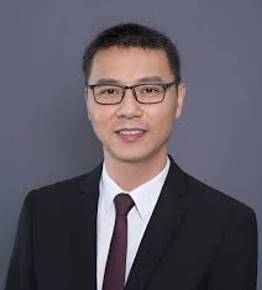
Dr. Shaohua Kevin Zhou
Distinguished Professor
School of BME & Suzhou Institute of Advanced Research
University of Science and Technology of China
Abstract
Artificial intelligence technology advances rapidly, going through the eras of perception, generative, and agentic AI, and has been widely applied in medical imaging tasks. Firstly, we point out the practical challenge of “Big Task, Small Data” in medical imaging, which means that there is a number of medical imaging tasks, while the amount of annotated data for each task is quite limited; meanwhile, the volume of unannotated or non-structurally annotated medical imaging data is enormous. Secondly, we introduce the training techniques of universal and foundation models, which effectively leverage the core characteristics of medical imaging mentioned above to train models, holding promise for addressing the above challenges.
– Universal models have task universality. By integrating different tasks, a universal model (UM) is trained to adapt to diverse data, modeling both the “commonality and specificity” of different tasks, thereby solving multiple tasks simultaneously.
– Foundation models have representational foundational properties. A foundation model (FM) is first trained using a large volume of data in an unsupervised, self-supervised, or semi-supervised manner. Then, through fine-tuning, the foundation model is transferred to different tasks. Foundation models can be mainly categorized into four types: image feature, vision-language, image generation, and image segmentation FMs.
Finally, we predict the technology trends of universal and foundation models and their impact to the future of medical imaging AI.
Bio
Zhou Shaohua, male, professor, and doctoral supervisor. Fellow of the American National Academy of Inventors (NAI), American Institute for Medical and Biological Engineering (AIMBE), and IEEE. Selected as a top academic talent by the Chinese Academy of Sciences.
In the fields of medical imaging and computer vision, he has published over 200 academic papers and book chapters, with over 10,000 citations on Google Scholar and an H-index of 50. He has authored and edited five academic books, including Deep Learning for Medical Image Analysis, which has sold over 1,000 hard copies, and Handbook of Medical Image Computing and Computer-Assisted Intervention, regarded as a comprehensive and authoritative reference in the MICCAI research field.
He has over 14 years of experience in the industry, having served as Senior R&D Director and Chief AI Scientist at Siemens. He holds more than 140 authorized patents, with algorithms successfully integrated into over 10 FDA-approved products. These products have been deployed in thousands of hospitals worldwide, benefiting the clinical diagnosis and treatment of over 7 million patients.